
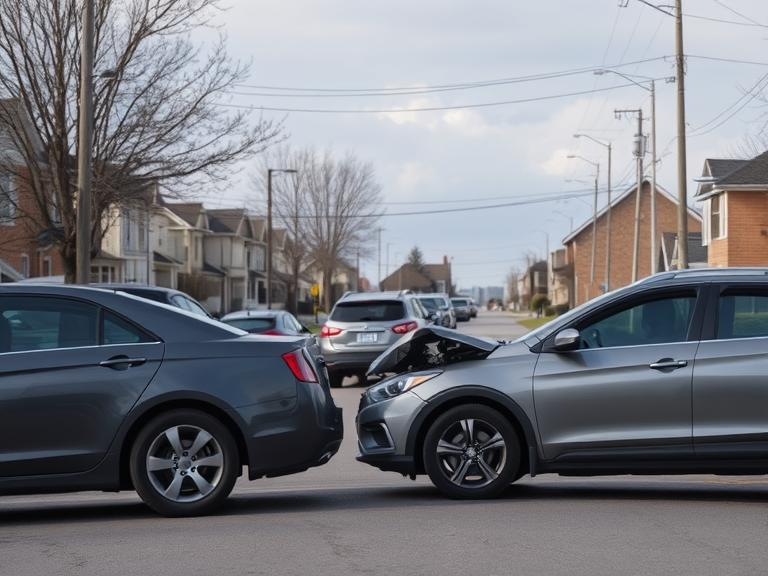
Modern vehicle safety features—such as lane-keeping systems, adaptive cruise control, and crash prevention technology—have made cars safer but also significantly more expensive to repair. As a result, even minor collisions are increasingly leading to vehicles being written off by insurers rather than repaired.
This was the case for Carolyn Riley-Joseph of North York, whose 2020 Jaguar E-Pace was involved in a minor rear-end collision while stopped at a red light. Initially quoted $4,000 for repairs, the estimate rose to $8,000 and potentially up to $15,000 after further inspection. Despite the car being only five years old with 75,000 km and no major visible damage, her insurance company decided to write it off and offered her $26,000.
Riley-Joseph questioned the decision, noting that the airbags had not deployed and there was no apparent frame damage. Her insurer, Echelon, cited privacy reasons for not commenting on the specific case but stated that write-offs are based on whether repairs exceed or approach the vehicle’s actual cash value (ACV). Sometimes, vehicles are written off even if repair costs are slightly below the ACV due to practicality and cost-efficiency.
Industry experts, including the Automotive Industries Association of Canada, point to rising repair costs, parts shortages, and the complexity of modern safety systems as key reasons behind the increasing number of total loss declarations. These systems, which often rely on integrated cameras, radars, and sensors, require more parts to be replaced than in the past, driving up repair bills.
Riley-Joseph remains frustrated, as she still owes more on the vehicle than the insurance payout and believes the car should be repaired rather than written off. Nonetheless, her insurer is proceeding with the total loss settlement.