
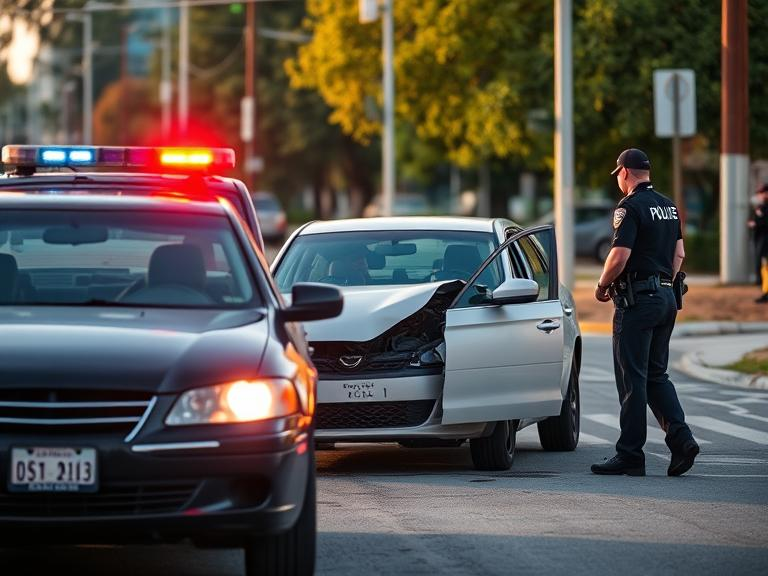
Determining who is at fault after a car accident in Ontario can be more complicated than it seems. While insurance companies rely on the province’s Fault Determination Rules (FDRs) to assign responsibility, these guidelines differ from how courts assess negligence in lawsuits. This guide explains how fault is determined under both systems, supported by practical examples that highlight the differences.
What Are Ontario’s Fault Determination Rules?
The Fault Determination Rules, established under Ontario’s Insurance Act, provide a standardized system for insurance companies to assess fault after a collision. These rules consider factors such as the nature of the accident, driving behavior, and applicable traffic laws.
Importantly, FDRs are used only for insurance purposes—specifically, to determine which insurer will cover damages and how fault affects premiums. They do not determine legal liability in a court setting.
Fault Determination in Lawsuits: The Common Law Approach
When fault is assessed in a lawsuit, Ontario courts rely on common law principles of negligence, not the FDRs. The analysis considers whether a driver’s conduct fell below the standard of reasonable care and whether that conduct caused the accident.
Courts evaluate several factors, including:
- Duty of Care: Whether the driver had a legal obligation to act responsibly toward others on the road.
- Breach of Duty: Whether the driver failed to uphold that duty through careless or reckless actions.
- Causation: Whether the driver’s breach directly caused the collision and the resulting injuries or damages.
Examples of Fault Determination
Below are common accident scenarios showing how fault may be assessed under both the Fault Determination Rules and common law negligence.
- Rear-End Collision:
- FDRs: The rear driver is typically held 100% at fault.
- Common Law: Fault could be reduced if the lead driver braked suddenly without cause or if a mechanical issue contributed to the crash.
- Intersection Collision:
- FDRs: Fault depends on right-of-way, traffic lights, and signage.
- Common Law: Courts may also consider distractions, weather, or visibility that affected either driver’s judgment.
- Lane Change Accident:
- FDRs: Usually the fault of the driver making the lane change.
- Common Law: The other driver’s excessive speed or failure to signal may influence the court’s decision.
- Left-Turn Collision:
- FDRs: The turning driver is generally at fault unless the other driver was speeding or ran a red light.
- Common Law: Visibility, timing, and road conditions are also considered.
- Single-Vehicle Accident:
- FDRs: The driver is typically found at fault.
- Common Law: Fault may shift if the crash resulted from road hazards, poor maintenance, or a medical emergency.
Fault and Its Impact on Insurance Premiums
Your insurance provider uses the percentage of fault assigned to you under the FDRs to determine your fault rating, which directly influences your premium. A higher fault percentage usually leads to increased rates.
However, remember that insurance fault assessments don’t always match legal responsibility in a lawsuit. You could be considered “at fault” for insurance purposes but not legally liable for damages in court.
Key Takeaways
- The Fault Determination Rules guide insurance fault decisions, not legal judgments.
- Courts assess fault based on negligence, which allows for broader consideration of evidence.
- Your insurance premiums may rise if you are found at fault under the FDRs.
- You have the right to dispute your insurer’s decision or seek legal advice if you disagree with their determination.
Understanding how fault is determined in Ontario helps you make informed decisions after an accident—whether you’re filing an insurance claim or considering legal action.